
Nickel 61 and ERNi-1 Filler Metals
HGC Manchester is a well-known supplier, distributor, stockiest and exporter of Nickel Filler Metal 61 manufactured by Special Metals in Manchester, United Kingdom.
Special Metals Nickel Filler Metal ERNi-1 is used for Nickel 200 and 201 gas-tungsten-arc, gas-metal-arc, and submerged-arc welding. It is also used for surfacing of steel. Incoflux NT100 Submerged Arc Flux is used with the submerged-arc process. The reaction of carbon with titanium retains a low level of free carbon and allows the filler metal to be used with Nickel 201. Welding metal has good resistance to corrosion, especially in alkali.
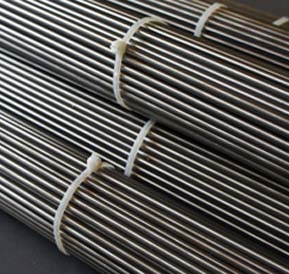


Nickel Filler Metal Applications
NA32 and SG-NiTi4 nickel filler metals can be selected according to the applicable DIN 1736 and AWS A5.14 requirements for specific welding applications. Nickel filler metals are available in suitable grades and product forms based on the base materials, welding process and required service conditions.
The different applications for Nickel Filler Metal 2.4155 include the joining of Nickel 200 and 201 to stainless steel, carbon steel, Inconel alloys, Incoloy alloys, copper-nickel alloys, and Monel alloys. Nickel Filler Metal SNi2061 is also used for joining copper-nickel alloys to Inconel and Incoloy alloys, and for joining Monel alloys and copper-nickel alloys to carbon steel.
Available Types of Nickel 61 Filler Metals
 Nickel 61 Filler Metals
- Alloy 200 Filler Metal Rod
- Nickel 61 Filler Metal Electrodes
- Nickel 200 Filler Metal Rods
- Nickel 201 Filler Metal Electrodes
- Nickel® Alloy 61 Filler Metal Exporter
- Nickel 141 Filler Metal Rod
- DIN 1736 Nickel Filler Metal Electrodes
 ERNi-1 Nickel Filler Metals
- Ni 2061 Filler Metal Electrodes
- Alloy 201 Filler Metal Rods
- ERNi-1 Nickel Filler Metal Electrodes
- NA32 Nickel Filler Metal Rod
- UNS N02061 Filler Metal Electrodes
- Nickel 2.4155 Filler Metal Rods
- SFA-5.14 Nickel Filler Metal Supplier
Nickel 61 Filler Metal Specifications and Standards
| Standard / Specification | Designation |
| AWS A5.14 | ERNi-1 (UNS N02061) |
| ASME II, Part C, SFA-5.14 | ERNi-1 (UNS N02061) |
| ASME IX | F-No. 41 |
| BS 2901 Part 5 | NA32 |
| DIN 1736 | SG-NiTi4 (2.4155) |
| (EN) ISO 18274 | SNi2061 (NiTi3) |
Nickel 61 Filler Metals Equivalent Grades
| AWS A5.14 | DIN 1736 (2.4155) | BS 2901 | SFA-5.14 |
| ERNi-1 | Ni 2061 | NA33 | UNS N02061 |
Nickel 61 Filler Metals Chemical Composition
| Ni+Co. | 93.0 min |
| C | 0.15 max |
| Mn | 1.0 max |
| Fe | 1.0 max |
| S | 0.015 max |
| Cu | 0.25 max |
| Si | 0.75 max |
| Al | 1.5 max |
| Ti | 2.0-3.5 |
| P | 0.030 max |
| Others | 0.50 max |
Nickel 61 Filler Metals Mechanical Properties
| Grade | Tensile Strength (ksi) min | Elongation (% in 50mm) min | Yield Strength 0.2% Proof (ksi) min |
| Nickel 61 | 60,000 psi, 414 mpa |
20 |
– |
Frequently Asked Questions About Nickel Welding Filler Metals
Q1. What are nickel welding filler metals used for?
Nickel welding filler metals are used to join nickel alloys and selected dissimilar metals. Selection depends on the base metals, welding process, service environment and required weld properties.
Q2. What is ERNi-1 nickel filler metal?
ERNi-1 is a nickel filler metal classification associated with UNS N02061. It is used for welding Nickel 200 and 201 and selected nickel-alloy applications.
Q3. Which specification applies to Nickel 61 filler metal?
Nickel 61 is classified as ERNi-1 under AWS A5.14 and ASME SFA-5.14. Other applicable designations include BS 2901, DIN 1736 and ISO 18274.
Q4. Can nickel filler metals be used for dissimilar-metal welding?
Yes. Suitable nickel filler metals can join selected dissimilar metals. The correct grade depends on the base-metal combination, welding process and required service performance.
Q5. How do you select the right nickel filler metal?
Consider the base metals, welding process, operating temperature, corrosion conditions and applicable specifications. These factors determine filler compatibility and expected weld performance.
Q6. What should buyers confirm before ordering nickel filler metals?
Confirm the filler classification, grade, specification, product form, dimensions and required documentation. These details should match the welding procedure and project requirements.